



New low-cost modular regasification
Atlantic Gulf & Pacific Company (AG&P) has introduced two standardised modular regasification technologies which allow lower cost and high efficiency hybrid LNG import terminals to be configured.
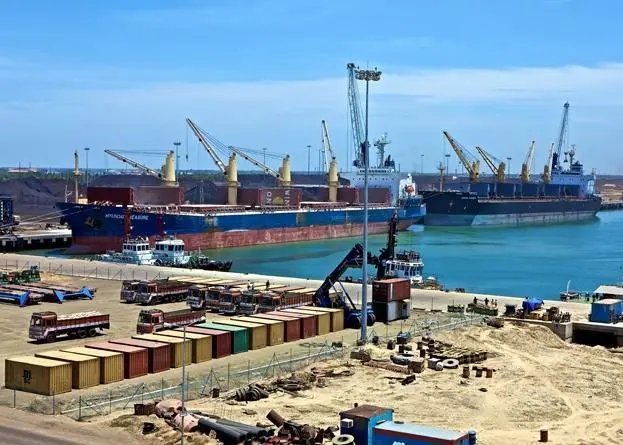
Due to be deployed at AG&P’s LNG import terminal at Karaikal Port in India and at two facilities currently under development in Latin America, the water-bath type vaporisation (WBV) technology and the fan ambient air vaporisation (FAV) technology are expected to meet the capacity needs of a wider range of small to mid-scale customers with greater flexibility, increased efficiencies and improved emissions.
“Our technologies allow us to configure hybrid terminals which is extremely cost-effective and allows for installation in locations that are currently constrained or inaccessible,” said Nancy Ballout, vice president of process engineering and operations at AG&P.
“Modularization ensures faster fabrication and easier transportation, so facilities are up and running sooner.”
Heat transfer
AG&P’s WBV technology utilises fire tubes to transfer heat to a bath of water by convective and conductive heat transfer. The combustion gas never directly contacts the water. To minimise emissions and improve efficiency, the design can also include low NOx burner technology and a waste heat recovery economiser.
It is suitable for offshore and onshore applications where space is limited; ideal for cold climate and environmentally regulated sites, including sites where an open loop system utilizing seawater is not feasible; and comparable to submerged combustion vaporizers (SCVs) normally used onshore in cold climates but designed to be used in offshore/floating applications.
FAV technology is for subtropical and tropical locations with ambient air temperatures greater than 15 degrees with adequate available space. It simplifies the design of the regasification train, its operations and maintenance.
Benefits of FAV include minimal size and complexity to allow for a faster build and easier installation; and integrated features that maximise space, improve flow and increase utilisation to improve overall operational efficiencies. The technology also enables the module to be split into two or stick-built and installed onsite, making it suitable for sites that cannot be accessed with a single, prefabricated module.
WBV and FAV complement AG&P’s water-glycol shell and tube (STV) standard technology for regasification modules, which was introduced in 2017 and will also be used at the three facilities, stated Ms Ballout.
Related Articles
 ALTERNATIVE FUELS GREENPORT
 ALTERNATIVE FUELS GREENPORT
 ALTERNATIVE FUELS GREENPORT