

Paracas carves out its niche
‘One man’s gain is another’s pain’ as the old adage goes and this is the case with Puerto de Paracas which has made inroads into Callao’s general cargo traffic. But will it last? Rob Ward reviews developments
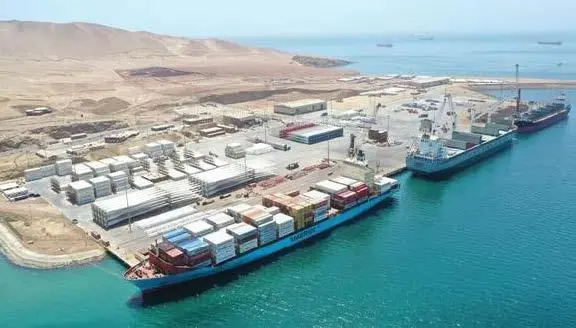
Quite often the travails of one port can be a triumph for another and this seems to be the case in the general cargo sector in Peru, where Callao, the biggest port on the West Coast of South America (WCSA), has, over a two-year period, been losing shipments to Puerto de Paracas (PDP), some 230 km to the south, close to the city of Pisco (with 115,000 inhabitants and home of the classic cocktail, Pisco Sour).
Cesar Rojas, the Operations Director for PDP, says that the “severe congestion” in and around Callao and lack of political will to fix it from the Lima government, has created “opportunities to fill a vacuum and we have gladly filled it”.
At least they did for the past two years when Rojas estimates that more than 180,000 tonnes of cargo switched from Callao to Paracas in each year, helping to more than double its general cargo throughput from 1.36m tonnes in 2020 to 2.775m tonnes in 2022.
“ We are forecasting around 2.8m metric tonnes for this year but this time it will be with hardly any Callao cargoes transferring over to us,” Rojas told Port Strategy. “That is because the Peruvian economy is really struggling right now, with so many political changes [five Presidents in just three years], and on top of that our two biggest trading partners, the US and China, have both seen their economies cooling down and when those two big markets catch a cold here in Peru we always catch a severe cold too!”
Terminal managers at APM Terminal Callao see things a little differently and put most of the congestion down to “factors relating to Covid and post Covid” and see the defections to PDP as just a “temporary aberration”. (See XX)
PDP has always had its share of breakbulk and project cargoes, especially transformers, wind turbine and heavy vehicles for mining and other industries based in its hinterland, but for the past two years it has been receiving some “most unusual” shipments such as toilet rolls and diapers.
“A number of leading companies such as Suzano, the big cellulose producer, which supplies cellulose to Blue Chip companies like Kimberley Clark and Softys [a South American version of Kimberley Clark], need the cellulose pulp to make their products – such as Andrex toilet rolls and Kleenex, baby wipes and the like – and just cannot afford the delays that Callao suffered last year,” states Rojas.
He adds that if freight forwarders can find the right size break bulk cargo vessels then freight costs can sometimes be cheaper than via containerships.
CONGESTION COMPLAINTS
Estenio Pinzas, President of the Peruvian Shipagents Assocation (APAM), said that many of his members, especially those with breakbulk interests, are complaining at the congestion at the port of El Callao (as the locals call it) and also about the emphasis on containers, and suggestions are made to the powers that be regarding corrective actions, but nothing seems to change.
“To be fair the lay-out of the port does not help,” says Pinzas. APAM takes the view that the port of Callao is hemmed in by the City of Callao, and that the chaotic road infrastructure is the main source of the congestion, but Pinzas nevertheless does feel APMT Callao could do more.
“For our country and for the City of Lima it’s very important to have breakbulk and project cargo but with the mix of cargoes that APMT (operator of the multipurpose terminal) has to deal with it is difficult. Sometimes it can take three days to unload/load a vessel and at times there are 20 to 36 ships waiting in the lanes.”
To handle the increased loads PDP has ordered an extra Liebherr Mobile Harbour Crane (a LHM 420 from Sunderland, UK), to add to the two LHM 550s it already deploys.
With the extra lifting capacity and plenty of quay space and draft (around 12 meters) the annual capacity for PDP is around 6.5m tonnes so there is plenty of capacity to pick up more overflows from Callao, if ever the congestion there becomes overwhelming again, declares Rojas.
Related Articles
 OPERATIONS
 OPERATIONS
 OPERATIONS