




UKRAINE GRAIN EXPORTS RESTART BUT MORE CAPACITY NEEDED
The Ukraine is actively seeking new export gateways, as opposed to its main ports of Mariupol and Odessa, in an endeavour to implement foreign grain sales. There is no major expectation that typical grain export levels will be achieved but there is a determination “to do what we can,” as one grain trader puts it.
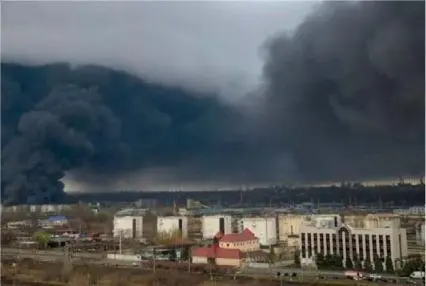
The focus is on foreign ports and smaller Ukraine ports that have not been subjected to attack by Russia. Mariupol, one of the country’s main ports is now in Russian hands as well as devastated by repeated attacks and Odessa has also been subject to attack as can be seen in the picture – both have been closed for some time.
As an alternative, in late April a first shipment of 71,000 tonnes of Ukrainian corn was shipped from the port of Constanta in neighbouring Romania. At this time, further shipments were announced for May.
Other surrounding nations have also offered to help with Lithuania’s Transport Minister reporting a test shipment planned from Klaipeda port.
There has additionally been discussion of the use of Latvian ports but in this respect and generally there are considerable logistical challenges. Aside from war damaged roads and bridges in Ukraine, differences in the gauges of European and Ukrainian railways serve to severely hamper export activity through foreign ports. The EU has talked of establishing ‘green lanes’ to expedite cross-border traffic but this is widely seen as offering only limited potential to get cargo moving.
Ironically, virtually all the candidate foreign ports do have the spare storage and cargo handling capacity required to move the cargo – the problem is getting it there.
Closer to home thousands of trucks carrying corn, wheat and sunflower seed are now making the long trip through the south of Ukraine to the ports of Izmail and Reni on the Danube River. From these ports product is loaded into barges for shipment to Constanta for onward transport by ocean carriers. There are long queues of trucks and capacity is limited.
The situation also has the potential to grow even worse when very shortly Romanian, Bulgarian, Hungarian and other farmers harvest winter wheat and barley ramping up capacity usage at alternative ports.
The resulting impact on world food supplies promises to be extremely serious. In 2021-22 crop year the US Department of Agriculture (USDA) assessed Ukraine’s maize (corn) production at 42m tonnes, with exports of at least 33m tonnes – around 17 per cent of global supply. Similarly with wheat the USDA placed production at 33m tonnes with exports of 24m tonnes (global market share of 12 per cent). Loss of major parts of these sort of export volumes will send prices higher, present alternative sourcing challenges and ultimately for a number of importing countries lead to major food security problems.
Related Articles
 OPERATIONS
 OPERATIONS
 OPERATIONS