Konecranes has been busy. It reports diverse projects spanning the Middle East and Europe.
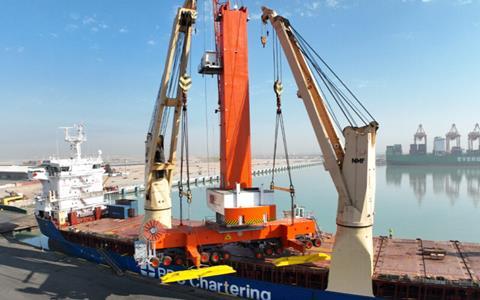
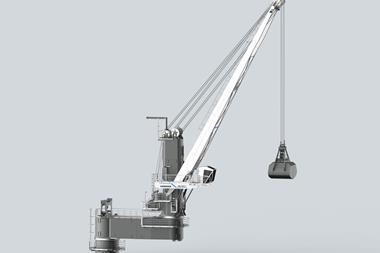
At the port of Umm Qasr, Iraq, Basra Gateway Container Terminal (BGT), operated by ICTSI, the terminal has received a new Gottwald ESP.8 mobile harbour crane, with a 125-tonne lifting capacity and a 54m boom. This new unit can serve vessels up to the post-Panamax class and is part of BGT’s ongoing terminal upgrade plans.
In Q4 2024, Terminales Marítimas de Vigo, S.L.U. (Termavi), at the Port of Vigo, Spain, ordered two hybrid Konecranes Rubber-Tired Gantry (RTG) cranes equipped with the complete range of Konecranes Smart Features. Delivery is scheduled for Q4 2025.
Both cranes are equipped with the complete range of Konecranes Smart Features including Auto-Steering, Auto-Truck Guiding, Auto-Path Optimization and Auto-Positioning, to ensure each RTG maintains container handling. Additional specifications include trolley and truck lane cameras, tyre pressure monitoring, fire suppression systems and automatic greasing systems.
In Slovenia, Luka Koper of the Port of Koper, Slovenia, confirms the acquisition of four Konecranes electric RTGs to replace older equipment in its container yard, as part of supporting a new quay project. The order was placed in Q3 2024 and delivery is expected during Q1 2025. These new units will join 15 existing electric RTGs, all driven by cable reel systems, as part of a total fleet of 28 machines.
Four new all electric Konecranes Gottwald Mobile Harbor Cranes are also on order by Katoen Natie, at the Port of Antwerp in Belgium. Booked during Q1 2025 and due for delivery in Q1 2026, this equipment will also benefit from a 10-year service level agreement.
The order consists of two ESP.9 units with a maximum lifting capacity of 200 tonnes and equipped with a Tandem-lift Assistant, enabling a combined maximum lifting capacity of 400 tonnes, plus two ESP.8 cranes with a maximum lifting capacity of 150 tonnes each. All cranes will have a Konecranes all-electric drive system, seamlessly integrating an external power supply with rechargeable batteries, to maximise energy efficiency while producing zero emissions.
Boluda Maritime Terminals Tenerife also confirms it signed a contract in December 2024 for four hybrid RTGs from Konecranes. All units will be equipped with Smart Features, including Auto-Steering, Auto-TOS Positioning, Auto-Positioning, Stack Collision Prevention and Truck Lift Prevention.
KALMAR KICKS ON
Kalmar is another major handling systems supplier that reports a busy time.
APM Terminals (APMT) has commenced trials for a new Kalmar electric reach stacker at its Suez Canal Container Terminal (SCCT), Egypt. This process will see APMT and Kalmar collecting data and insights with the aim of advancing the electrification of terminal operations.
The unit offers lifting capacities up to 45 tonnes and utilises a range of modular battery options and charging solutions.
In Q4 2024, Kalmar supplied four electric reach stackers to Norwegian port operator, Westport AS for its new terminal at the Port of Moss. The repeat order also featured a seven-year Kalmar Complete Care service agreement which provides customised maintenance to provide optimal operational efficiency.
Kalmar has also signed a new agreement with the Maputo Development Company to provide five Kalmar T2i terminal tractors, four Kalmar heavy forklift trucks and one Kalmar medium forklift truck. The order, which also includes MyKalmar INSIGHT coverage for all units in order to turn data into usable insights to identify areas where operational efficiencies can be gained, was booked in Q4 2024, with delivery slated for Q3 2025.
Another order booked by Kalmar in Q4 2024 is to supply Spanish terminal operator Boluda Corporación Marítima (Boluda) with four Kalmar Gloria reach stackers and two Kalmar Eco reach stackers. Delivery will take place in phases, with all equipment expected to be on-site by the end of Q3 2025.
The Kalmar Eco reach stackers are being delivered with a fuel-saving guarantee for greater financial predictability, based on a fixed level of fuel consumption using a set of mutually agreed metrics.
Related Companies
- Previous
- Next