

Second time around
John Bensalhia looks at the market trends, players, expertise and cost savings now on offer in the second hand equipment sector
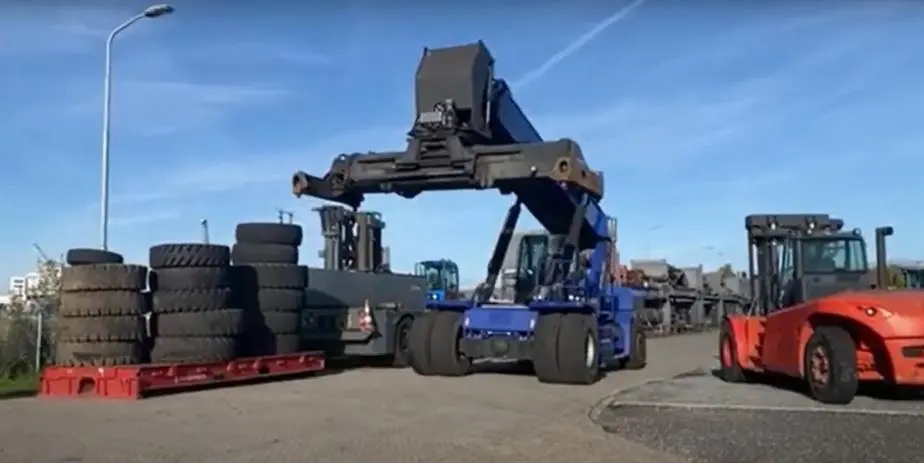
There is strong demand for second hand equipment sales and there is a broad base of suppliers but there are challenges, not the least of which is the longer retention of machines by their original purchasers impacting available stock.
“There are a number of key factors for the increase in the demand of used port equipment,” says Carlos Kohler, Owner, Port Solutions SL, Spain. “These include the Increase in the price of raw materials, longer delivery time for components, Covid lockdowns and the Ukraine war. High lead times on new equipment and significant price increases also prompt customers to search more extensively for used port equipment.”
Cees Halling, Sales Manager HQ, Forkliftcenter, agrees that lengthy delivery times for new machines play a part in the choice of second-hand equipment. But notes: “While there are lots of prospects for second-hand machines, it is difficult to source such machines with low hours and better condition. With long delivery times for new equipment, potential second-hand machines stay longer with original purchasers before being moved on.
Port Solutions SL, Spain’s, main business is the sale of used port equipment such as mobile harbour cranes. Carlos Kohler is also the dealer for Spain for Sany (reach stackers, forklifts, empty container handlers etc.), Verstegen (grabs), Phoenix Lightning (LED lighting) and Safetycage (safety cages for grab use).
Forkliftcenter also sells both new and used machines to its customers, who are mostly port-side terminal operators. The company reports some immunity to economic conditions: “For us, there is no difference,” says Halling. “High economies or low economies are both good for us, since we also can do rental in case our clients cannot finance a purchase”
Developing nations are taking advantage of second-hand cargo handling products and accompanying services – although this positivity is tempered by some restrictions. “The developing world has always been a good market,” says Halling. “But we notice a lack of lower priced machines, and more countries only allowing machines to be imported from a certain year of manufacture.”
An example of a niche second-hand equipment supplier is Alatas which recently undertook an equipment supply project on a turnkey basis.
Alatas Middle East undertook the sourcing, commissioning and refurbishing of a Sea Hercules SH2000SEM crane. The unit was required to replace the client’s existing ageing barge crane. The replacement unit found was only five years old and with 4000 running hours on the clock. Following dismantlement and shipment to Jebel Ali, Alatas’ workshop crew then inspected, tested, rebuilt and installed the crane with minimal disruption to operations.
ALTERNATIVE PROVIDERS
As well as specialist second hand port equipment dealers, there are other parties active in this sector.
APM Terminals Asset Category Management buys and sells used port equipment, including used ship-to-shore cranes, mobile harbour cranes, rubber tyred gantries, straddle carriers, reach stackers, terminal tractors and top handlers. This relatively new division of a global terminal operator represents an interesting initiative – effectively it has a ready-made platform to operate from; i.e. the sale of its own used equipment. It further promotes alongside second hand equipment sales provision of support via its affiliated company APM Terminals Crane and Engineering Services, also established as a standalone entity.
Leading industry cargo handling equipment manufacturers are also active in second hand equipment sales – Liebherr, Kalmar and Konecranes are prime examples.
Liebherr reports it offers a wide choice of used cranes, which, depending on the condition, can be sold as is, with repairs or with a complete overhaul. Liebherr works to each customer’s individual requirements. Tests and detailed inspections are carried out by a team of experts, who investigate elements such as welds and load-bearing components. Among the services offered are repair or replacement of individual components (including replacement of telescopic booms in the event of damage), servicing and cleaning.
In a financial context, there is the option of bringing existing equipment into the equation for the purposes of part exchange.
Kalmar claims the advantages of offering a wide range of used machines with each unit offering “the reliability of a new machine” but “with more stories to tell.” The company delivers over 1000 units of used equipment annually via its network of transporters.
The company states each second hand unit is carefully scrutinised and inspected to ensure quality and reliability. The inspections encompass the overall condition of the machine, checks of important components as well taking due account of its past usage. Detail is provided for Kalmar customers in the form of comprehensive documentation and (in the event of Kalmar conducting the past service), the machine’s service history.
The used equipment Kalmar global web site provides an overview of all categories of second hand machine, and of individual units with pricing.
Konecranes has particularly enjoyed some success supplying second hand mobile cranes which can be supplied with conversion and upgrade works implemented if required. A second hand mobile crane project that Konecranes cites as indicative of its sector expertise is the supply of BMF Port Burgas EAD’s two used Konecranes Gottwald Model 6 Mobile Harbour Cranes to BMF Port of Bourgas, Bulgaria. The cranes were supplied against a background of BMF continuing the modernisation of terminal facilities post privatisation and increasing demand across a range of cargo sectors including general cargo and container traffic. The order for two Model 6 units was followed up by an order for a Model 3 crane – a unit sourced by Konecranes with just 12,000 working hours recorded.
UPGRADE AND TRANSPORT
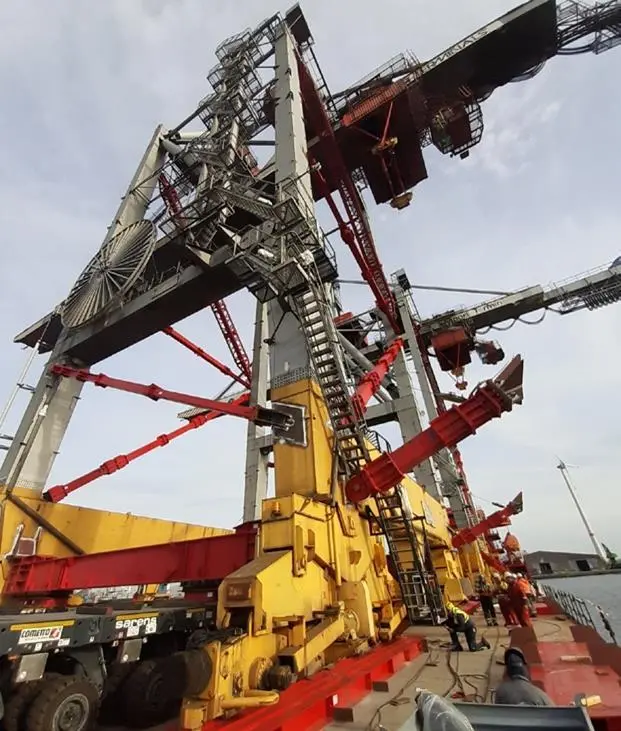
When selling second hand equipment, as indicated above, the option invariably exists for the client to refurbish and upgrade equipment.
Liebherr’s range of services includes the chance to upgrade machines with contemporary technology. This can be agreed with the client on a bespoke basis, as is the case with the majority of parties active in the sector.
Forkliftcenter upgrades its machines up to its FLC Checked & Service Standard. Cees Halling notes: “In FLC Checked & Serviced Condition (FLC C&S), we deliver a complete check on the machine; for the machine to be supplied without leakages; and that all options on the machine will be in functional condition and repaired if necessary.
“In addition, the machine will get a 1000-hour service and will be supplied with a maintenance manual and English user manual. Plus, if customers wish, there can be a cosmetic refurbishment (painting etc.) plus specialised works such as the installation of monitoring systems”
The sale of second hand units is one thing but transportation to the final destination can be another area of challenge, particularly with the larger units such as mobile cranes. An increasingly common trend is for the companies to offer shipping arrangements of the products themselves.
“Transport conditions are the key to a good sale at the moment,” says Kohler. “For this reason, I sell Ex Works (EXW), in which the buyer of a shipped product pays for the goods when they are delivered to a specified location.”
Halling states: “We have delivered during the last eight years to 138 different countries and each year, we have an average of 60-70 countries where we supply our machines. In 95% of all deals, we are providing the transport as well.”
Invariably, shipment by these and other companies is made either by offering a tender for the transportation work or inviting quotes or in conjunction with a regular transportation service provider. Safety considerations are a key factor as part of the transportation process, not an insignificant consideration with projects such as cranes on a heavy lift ship or a barge being towed.
BOTTOM LINE
Bottom line, there remains ongoing demand for a wide range of second hand cargo handling plant. Recently, the supply of this equipment has been negatively impacted by prevailing conditions – for example Covid lockdowns and other Covid influenced logistics – due to the original owners of plant retaining it longer than is usual, as a result of longer delivery times for new equipment and other influential factors. The basic appeal, however, of lower cost plant – often up to 50 per cent or more when compared to new equipment – will nevertheless continue to drive demand and encourage an increasingly professional supply sector. Indeed, this promises to particularly be the case in the short-term future with much of the world sinking into troubled economic times.
Related Articles
 DIGITAL
 PRODUCTS & SERVICES
 PRODUCTS & SERVICES