Day 2 of Coastlink brought into focus both the increasing complexity of the regulatory landscape and the practical steps needed to make shortsea shipping a more mainstream, reliable component of the logistics chain. Across keynote insights, technology-led discussions and a closing industry panel, a consistent message emerged: progress will depend on coordination across policy, systems and stakeholders, rather than isolated initiatives.
The day opened with a keynote from Johan‑Paul Verschuure, Maritime Entrepreneur – Director/Partner, Rebel Ports and Logistics, who examined the implications of the EU Ports Strategy alongside the wider Fit for 55 package. He highlighted the growing volume and complexity of regulation shaping both port and shipping operations, noting that misalignment in how measures are implemented across Member States and transport modes risks creating market distortion and unintended modal shift. As ports take on a broader role as industrial, energy and security hubs - not just logistics gateways - the need for long-term planning and regulatory alignment becomes more pressing. Verschuure stressed the importance of synchronising EU and IMO frameworks to ensure the sector can adapt effectively to a more tightly regulated environment without undermining competitiveness.
The second session shifted the focus to digitalisation and artificial intelligence, exploring how these tools are being applied in practical, operational contexts rather than as standalone innovations. Contributions from Karno Tenovuo, CEO, Awake.AI, David Trueman, Commercial Director, TBA Group and Tim Morris, Principle Engineer, Arup, moderated by Adam Dennett, Chair - Digital Technology Committee, SMI, centred on how better use of data can improve reliability, reduce inefficiencies and support compliance in an increasingly demanding operating environment.
Tenovuo demonstrated how AI-driven analytics are already delivering tangible benefits, including port call optimisation, support for Just-in-Time arrivals, congestion reduction and improved emissions monitoring. These applications are enabling ports and operators to make more informed, real-time decisions, directly addressing both operational and environmental pressures.
From a terminal perspective, Trueman emphasised the need for balance in data capture. While digital systems can unlock efficiency gains, revenue protection and improved visibility, there is a risk of overburdening operational teams if systems are not carefully implemented. In this context, AI was positioned firmly as a decision-support tool rather than a replacement for human expertise.
Looking at the wider logistics chain, Morris highlighted the importance of integration between maritime and landside transport systems. He argued that interoperable, connected digital platforms are essential if shortsea shipping is to play a greater role in resilient, lower-carbon freight corridors. The takeaway from the session was clear: digitalisation is no longer optional, but its success depends on common standards, coordination and a focus on practical implementation across the full transport chain.
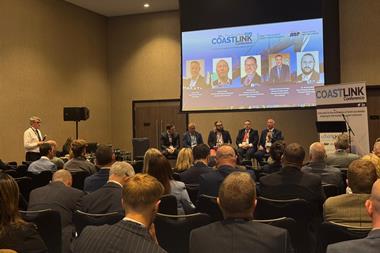
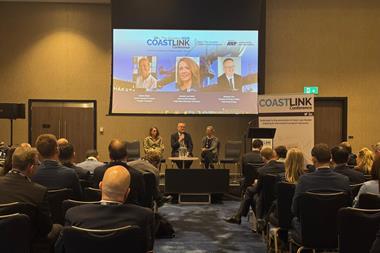
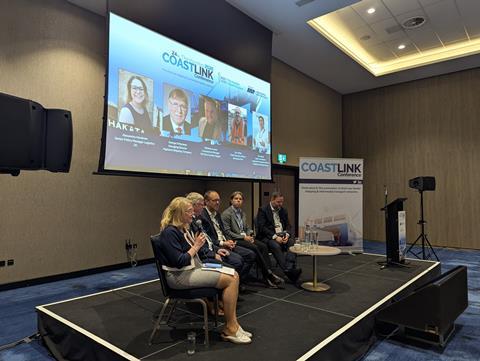
The final panel of the day brought together ports, operators and policy voices to examine how shortsea and coastal shipping can move beyond pilot projects to become a mainstream part of UK logistics. Panellists George S Macleod, Managing Director, Highland Shipping Company, Matthew Lowes, Commercial Manager, PD Ports Humber Region, Tom Willis, Chief Executive Officer, Shoreham Port) and Tom Marsh, Senior Consultant - Integrated Transport Delivery, Catapult Connected Places pointed to real-world examples where the model is already working, particularly in bulk cargo, construction materials and renewable energy supply chains.
However, significant barriers remain. Fragmented demand, slow funding processes and a lack of visibility among cargo owners were all identified as key challenges to scaling services. There was broad agreement that while decarbonisation is an important driver, it is not sufficient on its own to shift behaviour. Cost, reliability and operational simplicity continue to be the deciding factors for customers.
Digital tools and improved data sharing can help address some of these issues, but panellists stressed that meaningful progress will require aggregation of demand, the development of regular, dependable services and stronger coordination between industry and policymakers.
In conclusion, Day 2 of Coastlink underscored a sector in transition. While regulatory pressures are intensifying and digital capabilities are advancing rapidly, the central challenge lies in alignment, of policy frameworks, digital systems and commercial models. Shortsea shipping has clear potential to play a larger role in sustainable and resilient supply chains, but unlocking that potential will depend on moving beyond fragmented efforts towards coordinated, scalable solutions that deliver both environmental and commercial value.