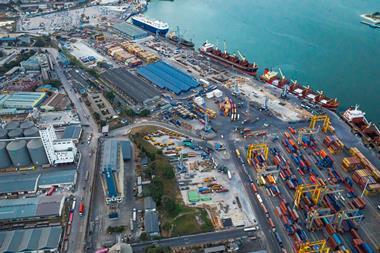
The Port of Beirut has reportedly been almost totally destroyed in a chemical explosion.
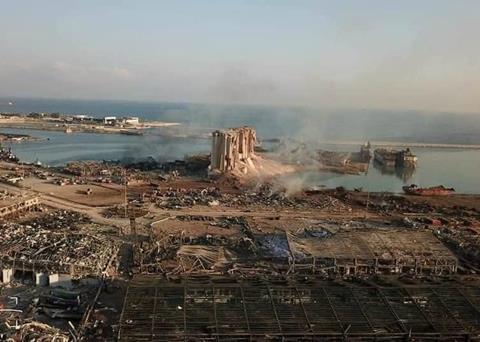
Maritime risk expert Dryad Global said that all operations at the port have ceased and the potential for chemical contamination is high.
In a short televised speech, Lebanese prime minister Hassan Diab, appealed to all countries to help to the nation, promising those responsible "will pay the price".
"I promise that this catastrophe will not go unpunished and those responsible will be held accountable," he said.
So far 70 individuals are reported to have been killed, a further 4,000 have been injured and many more are missing or have been left homeless because of the blast.
Profound impact
Lebanon's Head of General Security has said that the blast was caused by a fire in a depot of highly explosive material, including what is believed to be around 2,750 of stored sodium nitrate.
But the cause of the fire has not been confirmed.
The ammonium nitrate was originally confiscated in 2013 from the Moldovan-flagged cargo vessel RHOSUS, which failed Port State Control Inspections.
Four vessels in the vicinity of the blast have reportedly incurred damage. The Sierra Leone-flagged MERO STAR reported its hull has been breached and injuries have been incurred.
The Bangladeshi-flagged BNS BIJOY reported damage with up to 21 sailors being injured.
Rescue workers are continuing to search through rubble at the port, according to the civil defence director general, Raymond Khattar, who said it is believed people remain trapped.
MTV news said there is concern that the damaged structures are unstable and at risk of collapsing.
Meanwhile, Dryad Global said that Tripoli is now serving as Lebanon's main port to serve re-routed vessels from Beirut, but is only operating at 40% of capacity.
The effect not only on the port, but also on the country as a whole is expected to be profound.
It's estimated that 85% of the country's grain is stored in the area, which will greatly increase Lebanese reliance on imports in future.