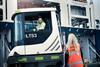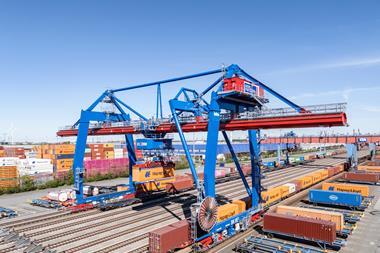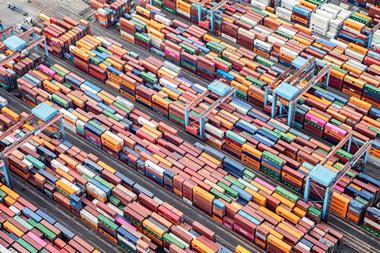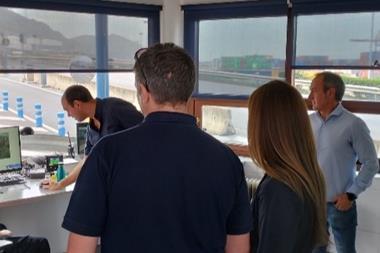



The system was demonstrated on 15 April 2026, during the Germany–Latvia Ports Days in Hamburg. It uses real-time video feeds combined with advanced vision-language models to identify vehicles, track equipment movements and calculate emissions based on operational intensity.
READ MORE: Germany and Latvia partner on port digitalisation
With ports under increasing pressure to meet EU climate targets, operators are now required to account for a growing share of their carbon footprint, including methane and nitrous oxide.
“By leveraging vision-language models, we’ve moved beyond the rigid training requirements of traditional computer vision,” said Kārlis Kalniņš, computer vision & edge AI product owner at LMT Group.
“This allows us to adapt instantly to new variables while maintaining a strict privacy-by-design framework.”
Unlike conventional systems that rely on predefined datasets or onboard sensors, LMT’s approach interprets unstructured visual data directly, linking detected activity with emissions outputs and generating time-stamped reports.
The project builds on a broader innovation partnership formalised through a 2025 memorandum of understanding between Latvian and German maritime stakeholders, including the Hamburg Port Authority and the Port of Riga.
Karsten Schönewald, managing director of Flotte Hamburg, said: “The path to climate neutrality requires not only infrastructure investment, but precise and reliable data. Innovative approaches like this can significantly improve both efficiency and environmental performance.”
LMT has previously deployed similar technology in airports and continues expanding its maritime solutions, including private 5G networks already operating in Baltic port infrastructure.