
A Brazilian port and maritime logistics operator has invested in an Israeli tech startup that will enable it to boost safe navigation and efficiency.
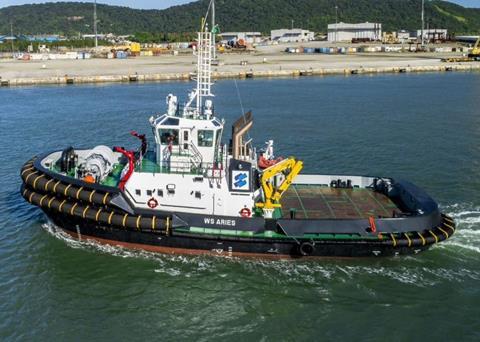
Wilson Sons has acquired a minority equity participation at Docktech. The deal also contemplates a commercial exclusivity agreement to install Docktech's technology throughout Brazilian ports. With the digital twins technology developed by Docktech and, through the data collected by its fleet of 80 tugboats, Wilson Sons will be able to understand the pattern and the silting behavior of Brazilian ports, predicting how certain factors could affect navigation conditions and security.
“The worldwide maritime infrastructure still does not offer tools capable of accurately determining the real depth of the access channels to the ports and the mooring berths. With the Docktech solution, it is possible to make this measurement more precisely and, thus, avoid underutilizing ship's cargo capacity and wasting dredging resources,” explained Márcio Castro, executive director of the tugboats business unit from Wilson Sons.
The technology is already running in the ports of Santos (SP) and Rio Grande (RS). “In both locations, we have already obtained encouraging results. The plan is to implement the solution in the coming weeks in Rio de Janeiro (RJ), Açu (RJ) and Vitória (ES) ports. Subsequently, we will expand to all places where Wilson Sons operates,” emphasised Mr Castro.
The system works as follows: Wilson Sons tugboats collect and process bathymetric data (depth measurement) of the ports where they are operating and, using the Docktech algorithm, monitor, in real time, the depth of the mooring berths and waterways access. With this data, it is possible to predict changes by recognizing patterns, ensuring greater safety for navigation.
In mid-2020, the Wilson Sons acquired a minority share in AIDrivers, a startup specialised in the development of autonomous mobility systems for port equipment.
Docktech was created in Israel with the mission of mapping the patterns that occur under water inside and outside ports, using data generated by ships and tugs. In 2017, the company won first place in the World Port Hackathon, a competition that also earned it the ‘Smart Port’ award.